
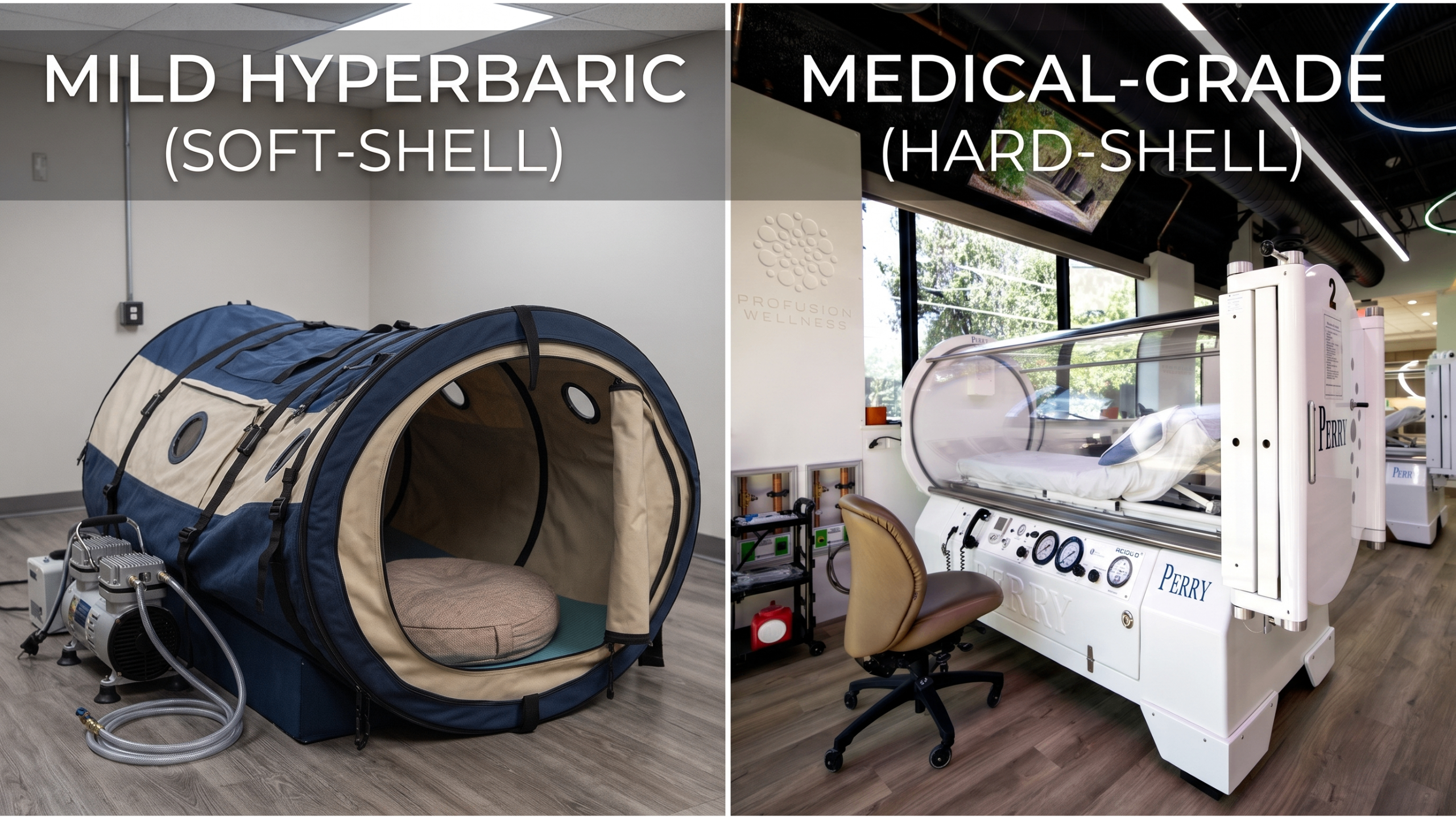
Key Takeaways
- Medical-grade hyperbaric oxygen therapy chambers operate at 2.0 to 3.0 ATA, while mild hyperbaric chambers typically run at only 1.3 to 1.5 ATA.
- Medical-grade HBOT delivers 100% pure oxygen, whereas mild chambers often use ambient air or concentrators delivering 24% to 97% oxygen.
- Higher pressure allows oxygen to dissolve directly into blood plasma, reaching tissue that lower-pressure sessions cannot access as effectively.
- Physician oversight and real-time monitoring during medical-grade sessions help catch complications that unsupervised mild chamber use might miss.
- Profusion Wellness Center provides medical-grade HBOT at 2-3 ATA with medical screening for patients throughout The Woodlands and North Houston.
Anyone researching hyperbaric oxygen therapy in The Woodlands or nearby North Houston communities will quickly notice that not every “hyperbaric chamber” offers the same experience. Some facilities use medical-grade chambers pressurized to hospital-level standards, while others use softer, portable units marketed for home wellness use. Understanding the gap between these two categories matters because it directly affects safety, comfort, and how much benefit a person can realistically expect.
Not All Hyperbaric Chambers Are Equal
The term “hyperbaric chamber” covers a surprisingly wide range of equipment. On one end sit medical-grade chambers, the kind found in hospitals and specialized clinics, built for clinical treatment under physician oversight. On the other end are mild hyperbaric chambers, often soft-sided and portable, designed for wellness settings or even home use. Profusion Wellness Center, which provides medical-grade HBOT at 2-3 ATA in The Woodlands, treats this distinction as a starting point for patient education rather than a footnote.
The two categories differ in far more than appearance. Pressure levels, oxygen concentration, safety protocols, and the conditions each type is approved to treat all vary substantially. For readers weighing options, the hyperbaric program at Profusion Wellness Center provides a useful reference point for what medical-grade treatment actually involves, from screening through monitored sessions.
The choice between these options should be guided by real health needs rather than personal preference alone. Someone recovering from surgery, managing a chronic wound, or pursuing serious athletic recovery needs a very different level of pressurized oxygen than someone looking for a light wellness boost. The rest of this guide breaks down exactly where those differences show up and why they carry real consequences for results.
Pressure Gap: 2-3 ATA vs 1.3-1.5 ATA
Pressure is measured in atmospheres absolute, or ATA, and it is the single biggest factor separating medical-grade chambers from mild ones. Medical-grade HBOT chambers typically operate between 2.0 and 3.0 ATA, meaning the pressure inside the chamber is two to three times greater than normal pressure at sea level. Mild hyperbaric chambers, by contrast, usually run between 1.3 and 1.5 ATA, a relatively modest increase.
That gap sounds small on paper but translates into a meaningful difference in what the body actually experiences. A chamber running at 1.3 ATA produces only a slight rise in blood oxygen levels. A chamber running at 2.0 ATA or higher creates conditions strong enough to drive oxygen deep into tissue in ways lower pressures cannot replicate.
Why Higher Pressure Drives Oxygen Into Tissue
Under normal atmospheric conditions, oxygen mostly travels through the body attached to red blood cells. Higher pressure changes that equation. At medical-grade pressure levels, oxygen dissolves directly into blood plasma, the liquid part of blood, allowing it to reach areas that red blood cells alone struggle to access, such as tissue with reduced blood flow.
This effect is measurable. Research on pressurized oxygen shows that plasma oxygen levels can increase by 10 to 15 times under medical-grade pressure. That kind of saturation is what allows oxygen to reach compromised tissue, support new blood vessel growth, and fuel the cellular repair processes people seek HBOT for in the first place. Mild chambers, operating at roughly half the pressure, simply cannot generate this same physiological push.
Pure Oxygen vs Ambient Air Concentrators
Pressure is only half of the equation. What a chamber actually pumps in also shapes the outcome, and here the contrast is just as sharp. Medical-grade HBOT delivers 100% pure oxygen directly to the patient inside a pressurized chamber. Mild hyperbaric chambers frequently rely on ambient air or oxygen concentrators instead, which deliver oxygen concentrations ranging anywhere from 24% to 97%.
Combining lower pressure with lower oxygen purity compounds the difference between the two chamber types. A session in a mild chamber at 1.3 ATA using ambient air delivers a fraction of the oxygen exposure that a medical-grade session at 2.0 ATA with pure oxygen provides. For someone managing a serious injury, post-surgical recovery, or a diagnosed medical condition, that gap can determine whether the therapy produces a noticeable clinical effect or simply a pleasant, low-impact experience.
What the Evidence Says About Outcomes
Clinical research on hyperbaric oxygen therapy is unevenly distributed across pressure levels. Most published studies demonstrating significant, measurable outcomes used pressures of 2.0 ATA or higher, which is the range where medical-grade chambers operate. That pattern is worth noting for anyone comparing marketing claims between wellness-oriented mild chambers and clinical HBOT providers.
Medically Approved Conditions for Pressurized Oxygen Treatment
Regulatory recognition follows the same pattern as the research. The Undersea and Hyperbaric Medical Society and the Centers for Medicare & Medicaid Services recognize hyperbaric oxygen therapy for specific conditions such as carbon monoxide poisoning, decompression illness, and diabetic foot ulcers. These clearances apply to medical-grade chambers operating at the higher pressure range.
Mild chambers occupy a much narrower regulatory lane. The FDA has cleared traditional hyperbaric chambers for these established medical uses, while soft-sided, lower-pressure chambers are cleared only for altitude sickness. That distinction matters for anyone assuming a mild chamber can substitute for medical-grade treatment when addressing a diagnosed condition.
Cellular Healing Effects at Medical-Grade Pressure
Beyond formal approvals, medical-grade pressure triggers a cascade of cellular activity that lower-pressure sessions rarely match. Reported effects at higher pressure levels include:
- Accelerated oxygen diffusion throughout the body, moving oxygen to tissue more than tenfold faster than normal
- Stimulation of anti-inflammatory markers and enhanced activity of white blood cells and immune factors
- Mobilization of stem cells that support tissue repair
- Increased blood flow paired with reduced inflammation and swelling
- Weakened infection-causing bacteria and stimulated growth of new blood vessels, both important for wound healing
These mechanisms explain why medical-grade HBOT shows up so consistently in clinical settings for wound care, post-surgical recovery, and cognitive support. The therapy is noninvasive and generally painless, which makes the pressure and oxygen differences even more relevant. Two chambers might look similarly comfortable from the outside, but only one generates the physiological conditions studies link to these outcomes.
Safety Oversight Makes a Real Difference
Pressure and oxygen concentration are not the only variables that separate these two categories. How a session is supervised changes the risk profile substantially. Clinical HBOT is administered by trained technicians under physician supervision, with sessions monitored in real time. Medical-grade chambers also undergo rigorous safety inspections and maintenance, and treatment is prescription-based, overseen by a physician from the start.
That level of oversight exists for good reason. Complications from hyperbaric oxygen therapy are generally mild and temporary, things like ear pain, minor ear injuries, or sinus pressure, and serious complications are rare. However, the risk of complications tends to increase with longer or more frequent sessions, which is exactly the kind of pattern trained oversight is designed to catch early.
Risks of Unsupervised Mild Chambers
Mild chambers used at home often operate without any professional oversight at all. That gap creates real blind spots for users, who may not recognize early warning signs of complications such as:
- Ear barotrauma, a pressure-related injury to the ear that can worsen without prompt attention
- Symptoms of oxygen toxicity, which can be subtle at first
- Contraindications between HBOT sessions and current medications or existing health conditions
Without a trained team monitoring these factors, individuals using unsupervised mild chambers are left to self-diagnose problems that a clinical setting would typically flag before they escalate. Safety nets differ substantially between the two categories, regardless of whether any particular mild chamber turns out to be unsafe.
Finding Pressurized Oxygen Care Near You
Residents of The Woodlands, Spring, Conroe, Magnolia, Tomball, Shenandoah, and Oak Ridge North have several factors worth weighing before booking a session. A few practical questions can help clarify which type of chamber fits a given goal:
- What pressure does the chamber reach, and does it fall within the 2.0 to 3.0 ATA range associated with medical-grade treatment?
- Is oxygen delivered at 100% purity, or through ambient air or a concentrator at a lower percentage?
- Is a physician or medical director involved in screening patients and overseeing sessions?
- Are sessions monitored in real time by trained staff, and is the facility maintained to clinical safety standards?
- Does the goal involve a diagnosed medical condition, post-surgical recovery, or a wellness-focused outcome like relaxation or general performance support?
According to Profusion Wellness Center, its medical director screens every new patient before beginning treatment, which reflects the kind of oversight this therapy calls for when pressure and oxygen levels reach medical-grade thresholds. That screening step is a useful benchmark to compare against when evaluating any hyperbaric provider, regardless of location.
Why Medical-Grade Pressure Matters
The difference between medical-grade and mild hyperbaric chambers comes down to physics and physiology working together. Higher pressure drives oxygen into plasma and tissue in ways lower pressure cannot. Pure oxygen amplifies that effect further than ambient air or partial concentrations ever could. Together, these factors explain why most rigorous studies and regulatory approvals cluster around the 2.0 ATA and higher range.
For anyone in The Woodlands or the surrounding North Houston area considering hyperbaric oxygen therapy for recovery, performance, or long-term wellness, understanding this distinction turns a confusing shopping decision into a clear one. Matching the chamber type to the actual health goal, whether that is supporting a diagnosed condition or pursuing general wellness, makes all the difference in what the therapy can realistically deliver. For a closer look at what a properly screened, monitored session involves, reviewing medical-grade hyperbaric oxygen therapy options is a practical next step toward informed care.
Profusion Wellness Center
+1 936 247 0707
3 Grogans Park Dr Ste 102
The Woodlands
TX
77380
United States


