Precision aroma chemicals and pharma intermediates drive Germany’s growth, as regulation and advanced synthesis reshape supplier dynamics through 2036
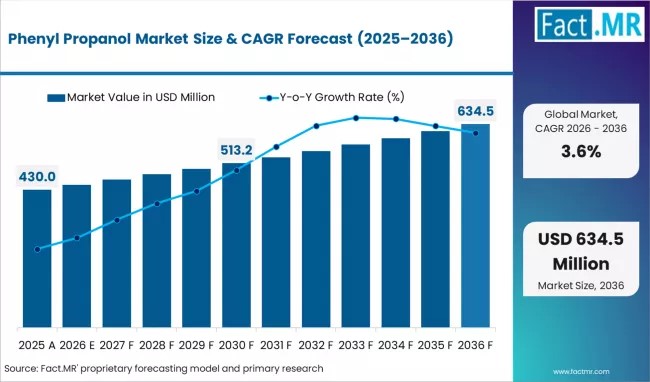
ROCKVILLE, MD, UNITED STATES, April 21, 2026 /EINPresswire.com/ — According to Fact MR’s latest analysis, the Germany phenyl propanol market is valued at approximately USD 100 million in 2025 and is projected to reach USD 103.5 million in 2026, expanding to nearly USD 140 million by 2036, registering a CAGR of 3.1%. The market is expected to generate an incremental opportunity of around USD 36–40 million over the forecast period. Market transformation is being driven by tightening olfactory consistency standards in perfumery, growing demand for optically pure pharmaceutical intermediates, and increasing compliance requirements under EU chemical regulations. Germany’s role as a high-specification production and consumption hub positions it as a critical node in the global phenyl propanol supply chain.
Get detailed market forecasts, competitive benchmarking, and pricing trends: https://www.factmr.com/connectus/sample?flag=S&rep_id=8793
Quick Stats
Market Size (2025): USD 100 million
Market Size (2026): USD 103.5 million
Forecast Value (2036): USD 140 million
CAGR (2026–2036): 3.1%
Incremental Opportunity: ~USD 36–40 million
Leading Segment: 2-Phenylpropanol (~60% share)
Leading Application: Fragrances (~55% share)
Leading Region: Western Europe (Germany-led)
Key Players: BASF, Symrise, LANXESS, Solvay, ICL
Executive Insight for Decision Makers
Germany’s phenyl propanol market is shifting from commodity chemical sourcing to specification-grade procurement. Buyers—especially fragrance houses and pharmaceutical firms—prioritize batch-to-batch olfactory consistency, GMP compliance, and optical purity over price.
Strategic Imperatives:
Invest in organoleptic testing infrastructure
Ensure GMP-certified production and traceability systems
Develop high-purity 2-phenylpropanol capabilities
Failure to adapt exposes suppliers to contract losses, higher rejection rates, and exclusion from premium supply chains.
Market Dynamics
Key Growth Drivers
Rising complexity in fine fragrance formulation
Expansion of chiral pharmaceutical synthesis programs
Strong EU regulatory push for quality and traceability
Growth in specialty solvents for high-performance applications
Key Restraints
High production and validation costs
Complex organic synthesis requirements
Limited scalability for small manufacturers
Emerging Trends
Shift toward optically pure isomers
Integration of AI-driven quality control in chemical production
Increasing supplier consolidation in Europe
Demand for sustainable and compliant aroma chemicals
Segment Analysis
By Type:
2-Phenylpropanol dominates with ~60% share due to its superior olfactory profile and widespread use in perfumery
1-Phenylpropanol holds ~40%, catering to niche synthesis applications
By Application:
Fragrances: ~55% share, driven by Germany’s strong perfumery and cosmetics industry
Pharmaceuticals: ~25%, fueled by precision synthesis demand
Solvents: ~20%, used in industrial and specialty applications
Strategic Insight:
The fragrance segment remains the anchor demand driver, but pharmaceutical applications represent the highest value-add opportunity.
Supply Chain Analysis (Critical Insight)
Raw Material Suppliers:
Petrochemical and aromatic compound producers supply benzene derivatives and propanol intermediates
Manufacturers:
Companies like BASF, Symrise, and LANXESS convert raw inputs into high-purity phenyl propanol isomers
Distributors:
Specialty chemical distributors ensure GMP-compliant storage, traceability, and delivery
End-Users:
Fragrance houses (fine perfumery, cosmetics)
Pharmaceutical companies (API synthesis)
Industrial formulators (solvents, coatings)
Who Supplies Whom:
Petrochemical firms → Chemical manufacturers → Certified distributors → Fragrance & pharma companies
Germany’s ecosystem emphasizes quality assurance at every stage, making supplier qualification a critical barrier to entry.
Pricing Trends
Phenyl propanol operates in a dual pricing structure:
Commodity-grade: Lower-priced, limited acceptance in high-end applications
Specification-grade: Premium pricing due to purity, consistency, and certification
Key Price Influencers:
Raw material costs (benzene derivatives)
Regulatory compliance costs
Certification (GMP, REACH)
Demand from fragrance and pharma sectors
Margin Insight:
Premium suppliers achieve higher margins (15–25%), while commodity players face pricing pressure.
Regional Analysis
Top Countries by CAGR (2026–2036):
India – 4.5%
China – 4.0%
USA – 3.2%
Germany – 3.1%
South Korea – 3.0%
Germany’s Growth Drivers:
Strong chemical manufacturing infrastructure
Leadership in high-quality fragrance formulation
Advanced pharmaceutical R&D ecosystem
Developed vs Emerging Markets:
Developed markets (Germany, USA) focus on quality and compliance
Emerging markets (India, China) compete on cost and scale
Competitive Landscape
The market is moderately consolidated, with top players controlling ~30–40% share.
Key Players:
BASF
Symrise
LANXESS
Solvay
ICL
Emerald Kalama
Eastman
Competitive Strategies:
Investment in high-purity synthesis technologies
Expansion of GMP-certified facilities
Strategic partnerships with fragrance houses
Focus on regulatory compliance and traceability
Strategic Takeaways
For Manufacturers:
Prioritize quality certification and consistency
Expand into pharmaceutical-grade production
For Investors:
Target companies with strong compliance capabilities
Focus on high-margin specialty chemical segments
For Distributors:
Build traceability systems
Align with premium suppliers
Future Outlook
Germany’s phenyl propanol market will remain a high-value, low-volume segment, driven by:
Sustainability and green chemistry initiatives
Increasing automation in chemical manufacturing
Growth in premium fragrance and pharma applications
Long-term opportunities lie in precision chemistry, digital quality monitoring, and sustainable synthesis technologies.
Conclusion
Germany’s phenyl propanol market is undergoing a structural shift toward specification-driven procurement, where quality, compliance, and consistency outweigh cost considerations.
For stakeholders, the opportunity lies not in scale alone, but in meeting the exacting standards of high-value end-users. Companies that invest in advanced synthesis, certification, and supply chain transparency will secure long-term competitive advantage in this evolving market.
Why This Market Matters
Phenyl propanol is no longer just a chemical input—it is a performance-critical ingredient in fragrance and pharmaceutical value chains. Germany’s leadership in high-spec applications makes it a benchmark market, shaping global standards and influencing procurement strategies worldwide.
Unlock 360° insights for strategic decision making and investment planning: https://www.factmr.com/checkout/8793
To View Related Report
Phenyl Trimethicone Market https://www.factmr.com/report/4260/phenyl-trimethicone-market
Diphenylmethane Diisocyanate Market https://www.factmr.com/report/diphenylmethane-diisocyanate-market
Diphenylamine Market https://www.factmr.com/report/4203/diphenylamine-market
P-Phenylenediamine Market https://www.factmr.com/report/p-phenylenediamine-market
About Fact.MR
Fact.MR is a global market research and consulting firm, trusted by Fortune 500 companies and emerging businesses for reliable insights and strategic intelligence. With a presence across the U.S., UK, India, and Dubai, we deliver data-driven research and tailored consulting solutions across 30+ industries and 1,000+ markets. Backed by deep expertise and advanced analytics, Fact.MR helps organizations uncover opportunities, reduce risks, and make informed decisions for sustainable growth.
S. N. Jha
Fact.MR
+1 628-251-1583
sales@factmr.com
Legal Disclaimer:
EIN Presswire provides this news content “as is” without warranty of any kind. We do not accept any responsibility or liability
for the accuracy, content, images, videos, licenses, completeness, legality, or reliability of the information contained in this
article. If you have any complaints or copyright issues related to this article, kindly contact the author above.

Media gallery